Stackd
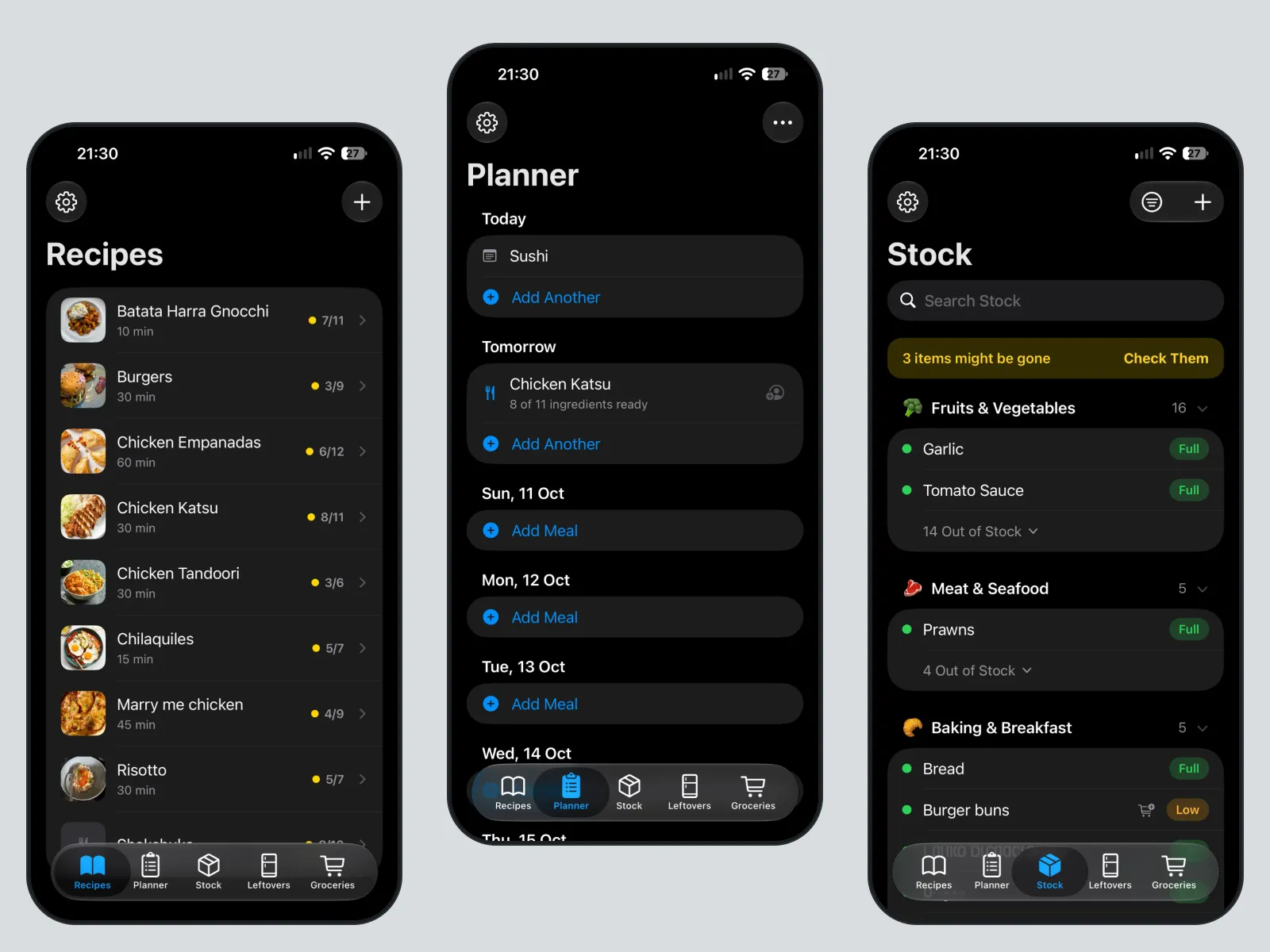
My girlfriend and I never knew what was in the house, so food went off and shopping was guesswork. So I'm building an app that fixes that for us, and soon for others.
- Client
- My own product
- When
- Aug 2026 - now
- Team
- Me, building with AI (Claude)
- Duration
- 2 months so far, App Store launch planned this year
- My role
- Product vision, Scope and priorities, Design, Building with AI, Testing
Challenge
We never knew what we had at home. Food went off, and without a list the supermarket was guesswork.
What I did
Started with the smallest useful thing, a stock list, and only added features that connect to what's already there.
Result
340+A web app and an iPhone app with stock, leftovers, recipes, a meal planner and a grocery list that fills itself. Now in testing, launching on the App Store this year.
The problem
My girlfriend and I kept running into the same thing: we never really knew what we had in the house. Food went off at the back of the fridge, and in the supermarket, without a list, we’d guess. Sometimes we bought things we already had, sometimes we forgot what we needed.
I wanted one place that gives an honest overview of what we own, and that makes planning meals feel easy enough that we actually do it.
My role
Stackd is my own product. I decide what it should do, what comes first and what doesn’t get built. I design every screen, and I build it with AI: I describe what I want, review what comes back, test it, and go back and forth until it feels right. The vision and the decisions are mine; the AI helps me turn them into working software much faster than I could alone.
Start small, then connect
The first version was a simple list of what’s in stock, plus leftovers, running only on my laptop. From there I only added features that make the rest better:
- Stock tracks what you have and marks it as full, low or out.
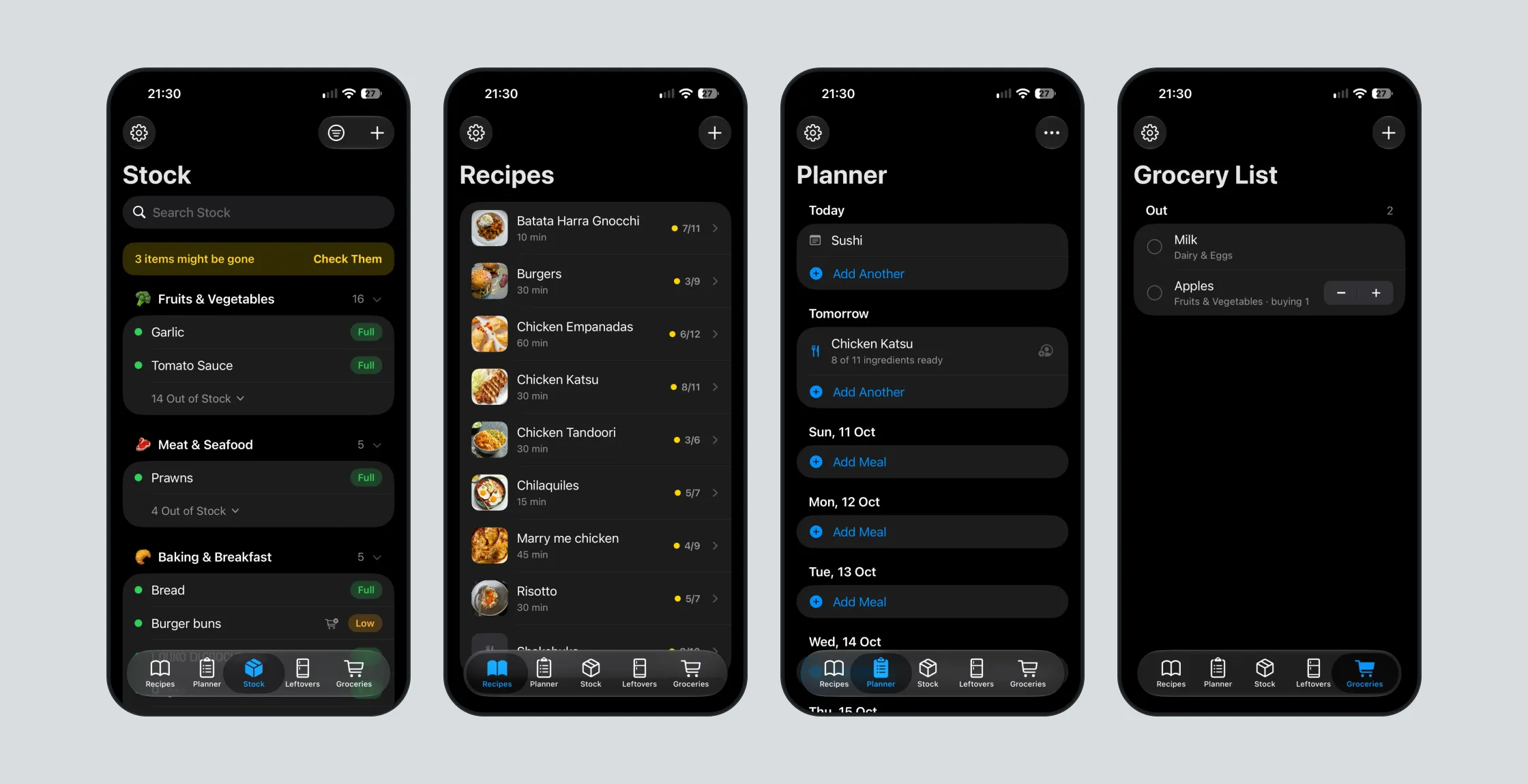
- The grocery list fills itself from what’s running low. If you always want something in the house, you mark it “keep stocked”.
- Recipes show whether you have everything for them, and can add what’s missing to the list in one tap.
- The planner shows per day whether the ingredients are there, and can schedule leftovers too, so they get eaten.
- The grocery list then shows which items you need for meals planned this week.
Each feature feeds the next. That’s the rule I use to keep it from getting bloated: if a feature doesn’t connect to the rest, it doesn’t go in.
Iterating
In two months Stackd has had more than 340 changes. Most of them are small: a clearer label, a tap that feels better, a list grouped in a more useful way. I test it, notice what feels off, and fix it. When the web version worked, I built a native iPhone app that follows the system’s look and feel, because this is something you use in the kitchen and the supermarket, on your phone.
Where it is now
Stackd runs on the web and on iPhone. Right now I’m testing and improving it through TestFlight, and I plan to launch it on the App Store later this year. It hasn’t been tested at scale yet; that’s the next big step.