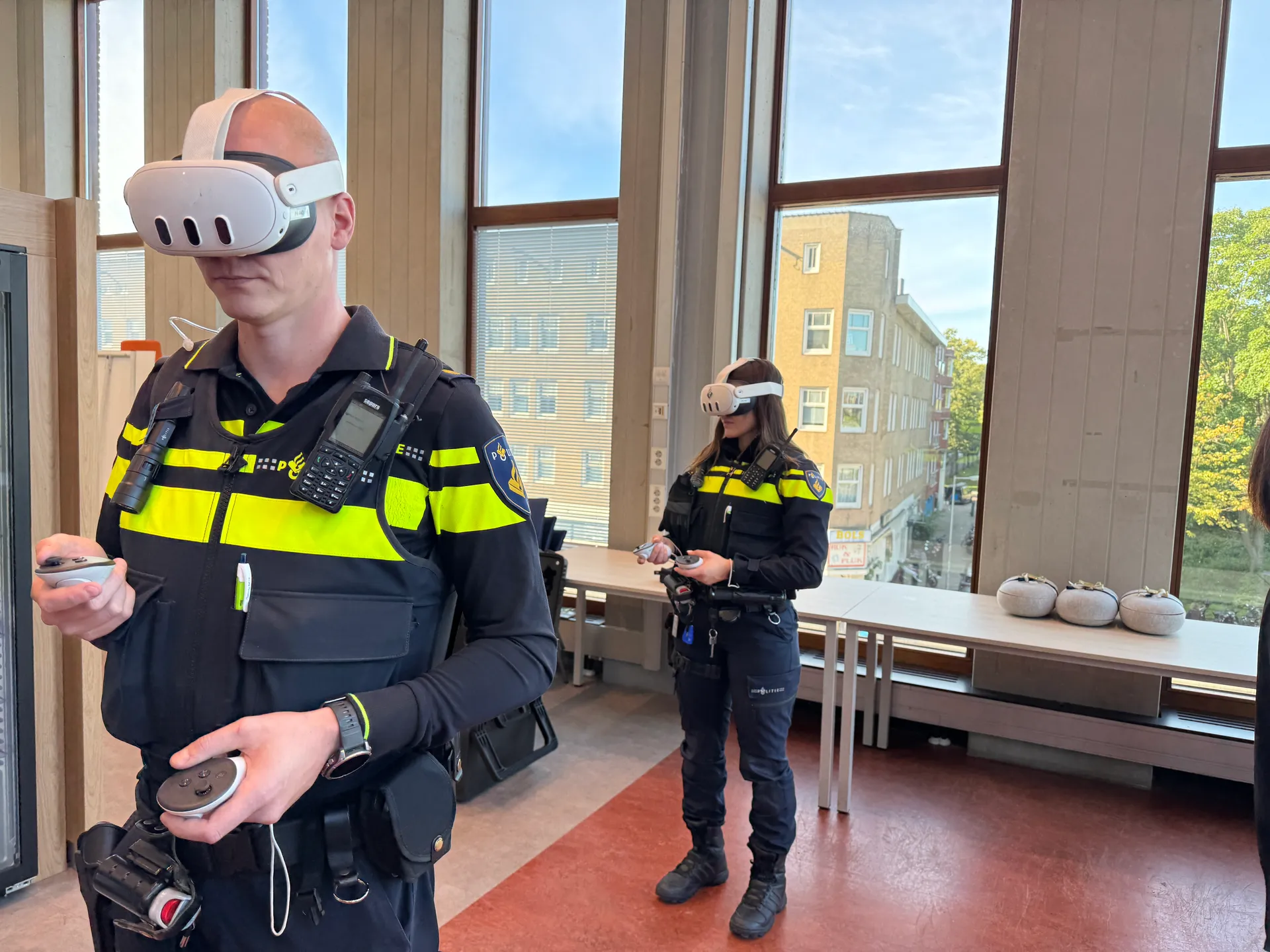
Crime Scene Management Training
The Police's earlier VR trainings needed people standing by to help. I led a small team to build one that officers can finish on their own.
- Client
- Dutch Police
- When
- Jan - May 2025
- Team
- 1 developer, 1 3D artist, and me on design and lead
- Duration
- About 5 months, shipped on time
- My role
- Project lead, Product decisions, Interaction design, UI design, Client contact
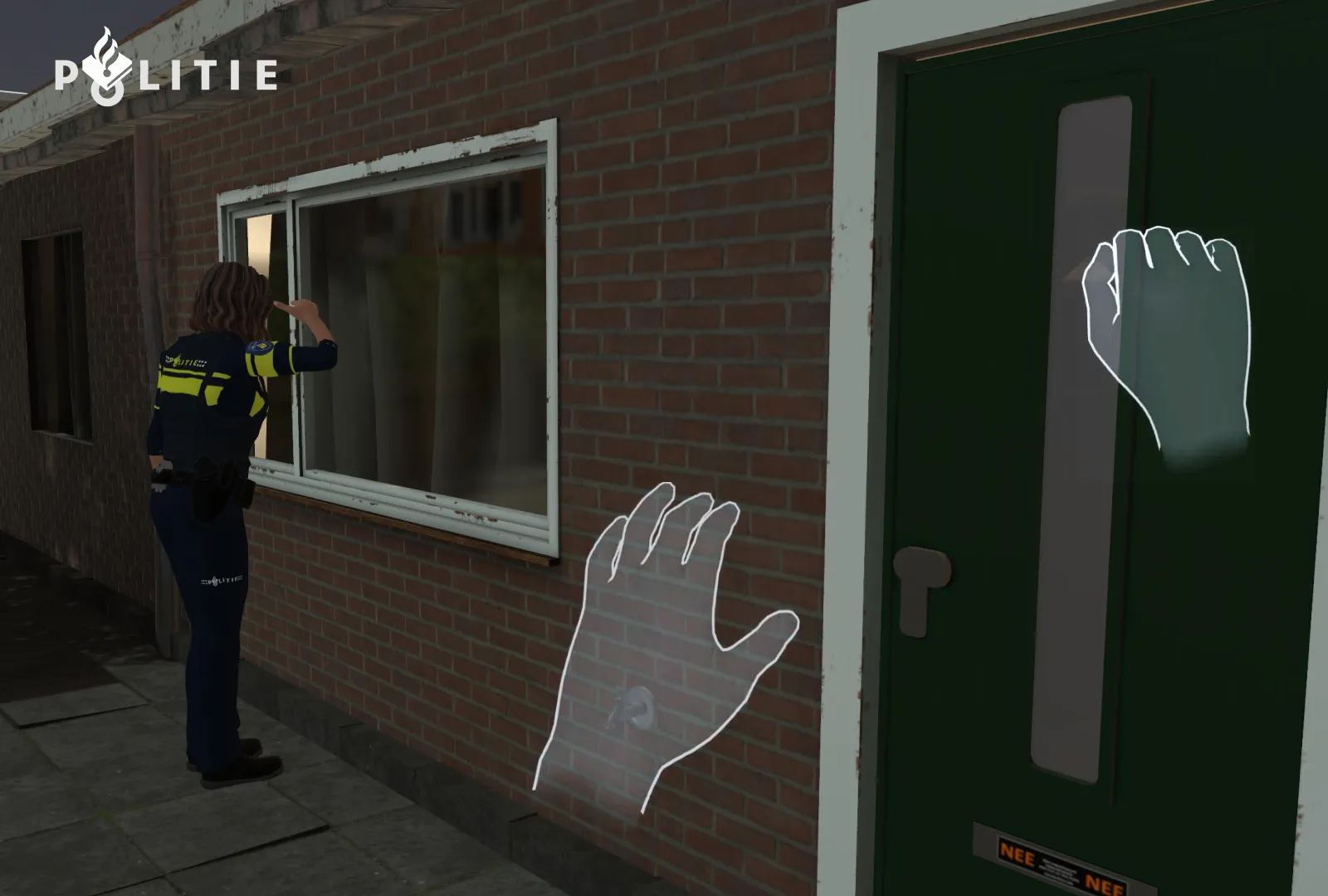
Challenge
Officers needed someone next to them to get through the Police's earlier VR trainings.
What I did
Made 'no help needed' the goal behind every decision, from how you move around to how you pick things up, and tested it on first-time VR users.
Result
2,000+Shipped on time, launched at an official Police kick-off, and used by thousands of officers with almost no questions.
The problem
The Dutch Police had already built VR trainings with VR Owl, and they worked. But they were complex: officers often needed someone next to them to get through. For a training meant for thousands of officers, that doesn’t scale.
KOOS had written the scenario: what happens at a crime scene and what an officer should do. Our job was to turn it into VR. My goal for the product was simple: an officer should be able to put on the headset and finish the training without help.
My role
I was the project manager and did the design myself. The team was small: one developer, one 3D artist and me. I set the priorities, planned the work, and was the contact for the Police. We met with their project team every week.
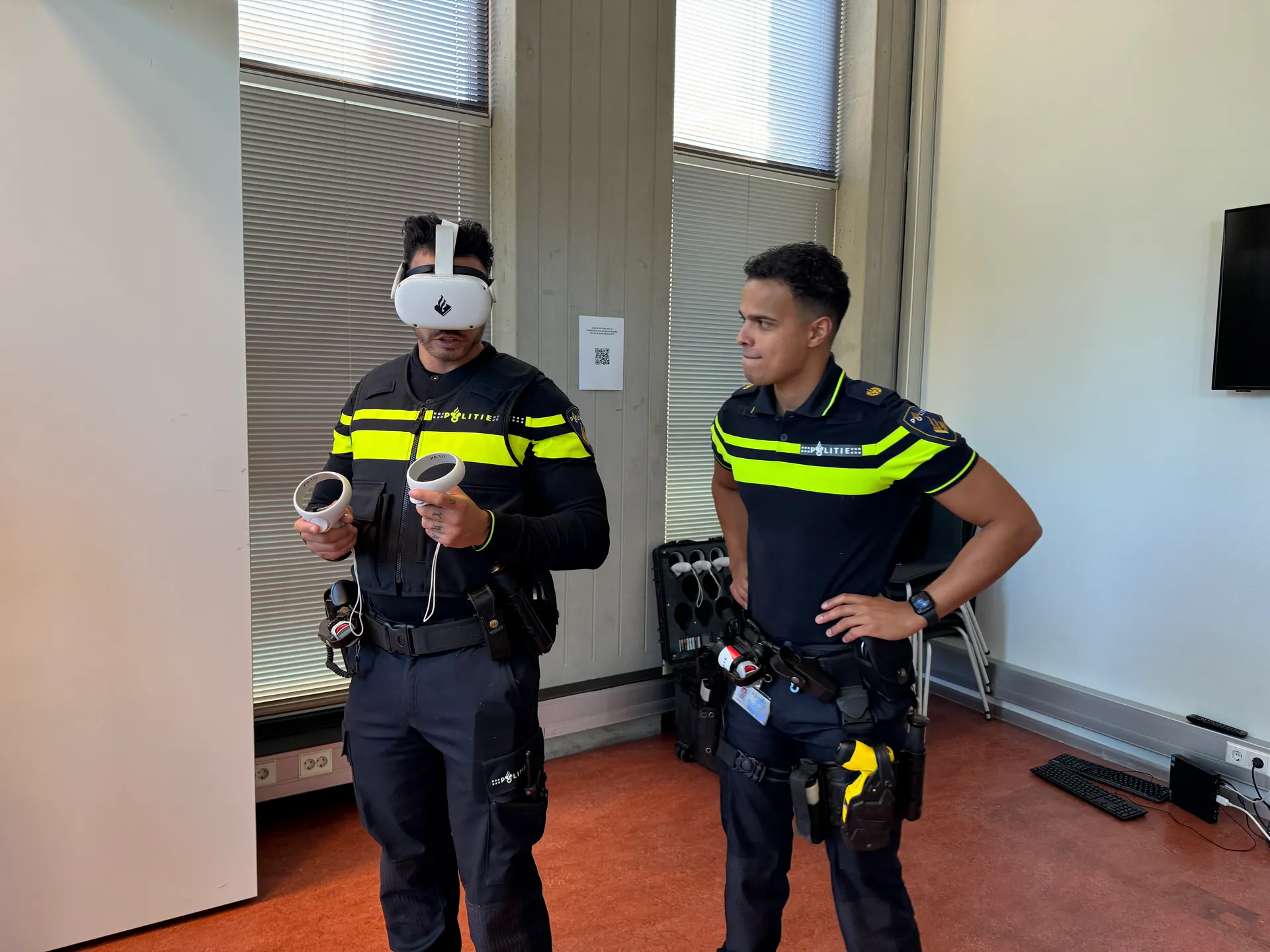
The decisions that mattered
Most of the work was deciding what a first-time VR user needs, and leaving out what they don’t. The biggest choices:
- How you move around. Moving in VR is where new users get lost or feel sick. I chose the way of moving that asks the least of someone who has never worn a headset.
- How interactions work. Every interaction works the same way throughout the training, so you only have to learn it once. Clear prompts and visual hints show what to do next.
- What to leave out. Anything that didn’t help an officer learn the procedure, or could confuse them, didn’t make it in.
I wrote these choices down in a design document before production started, so the developer, the 3D artist and the client were working from the same plan.
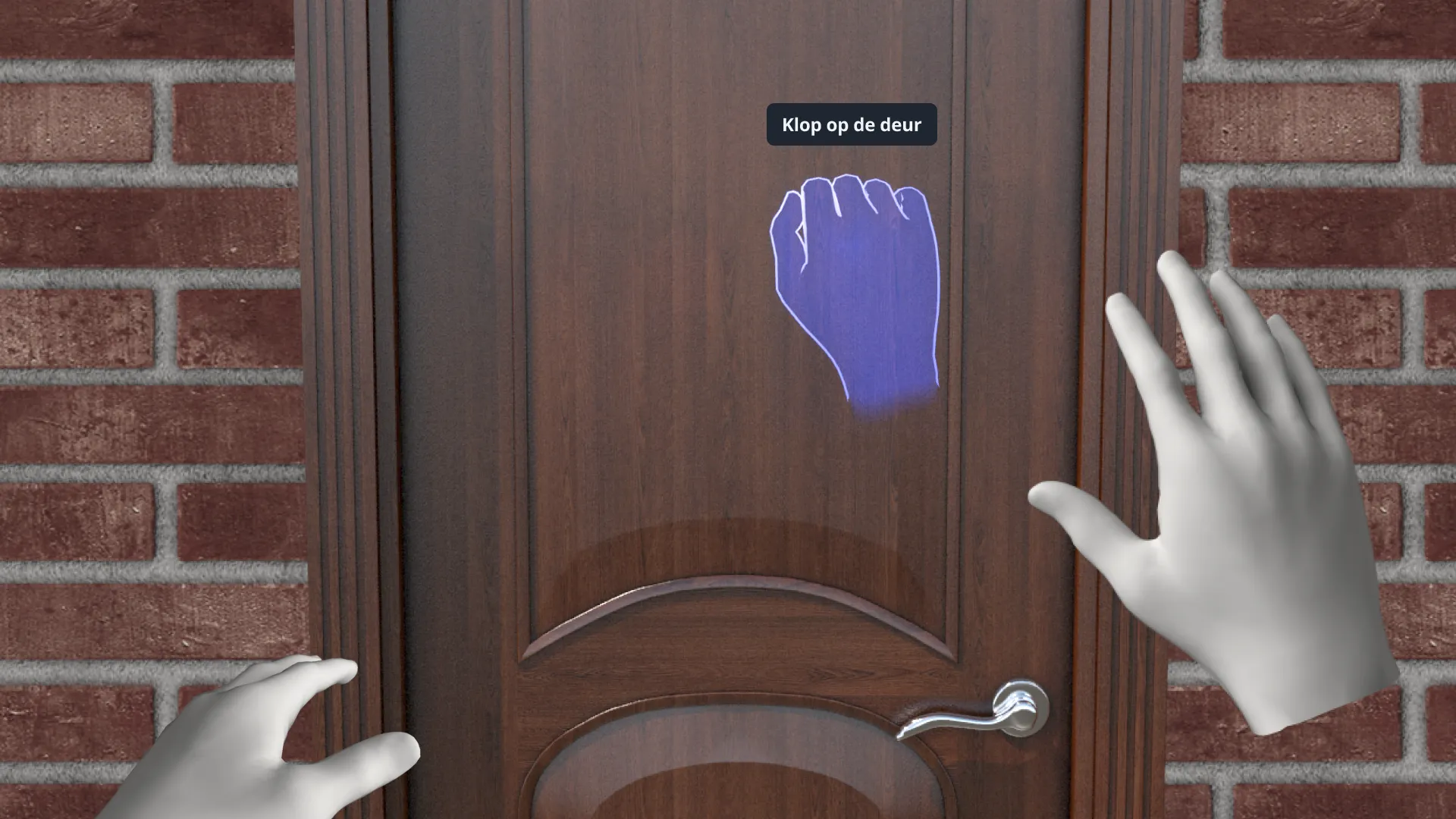
Testing early
We built the interaction model as a prototype first and tested it with people who had never used VR. Their feedback led to small changes in timing, hints and guidance before we built the full training. Fixing this in the prototype was much cheaper than fixing it at the end.
The interface follows the Police’s own visual identity, so the training feels familiar next to their other tools, while text size and contrast are tuned for reading in a headset.
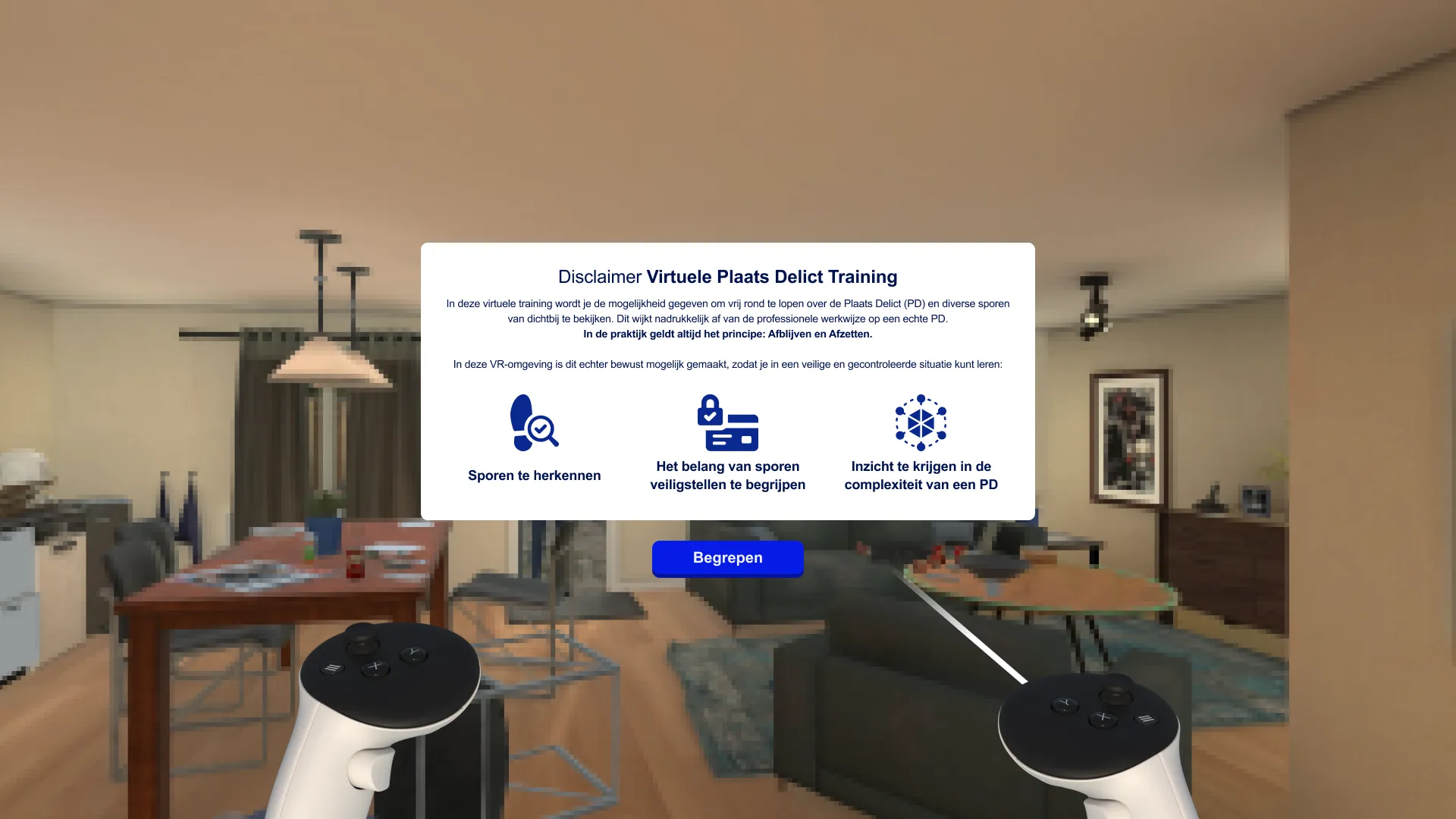
Outcome
We shipped on time after about five months. The Police launched the training at an official kick-off, with many people invited, and the reactions were very positive. Thousands of officers have used it since. Their project manager told us they rarely get questions about how it works: exactly the problem the earlier trainings had.
We found Jeremy to be a highly professional and decisive project manager during the development of VR Blauw ter Plaatse. Jeremy was quick to respond, contributed ideas, and ensured that our wishes were accurately translated into the final product. And last but not least: Jeremy is simply a very pleasant person to work with.
Tim Theeboom, Project leader Extended Reality, Dutch Police